Don’t invest unless you’re prepared to lose all the money you invest. This is a high-risk investment and you are unlikely to be protected if something goes wrong. Take 2 minutes to learn more
Crypto infrastructure stands at a crossroads. Infrastructure, the backbone of blockchain’s decentralization promise, continues to evolve far more slowly than the ideals driving the industry forward. Although blockchains distribute trust and eliminate single points of failure, the systems that feed, host and scale them often remain tethered to centralized giants like AWS, Azure and Google Cloud. This growing disconnect has become impossible to ignore.
Periodic cloud outages, bottlenecked capacity, and increasingly expensive compute demands have created a widening opening for companies building distributed networks. As a result, new players are challenging the status quo by arguing that decentralizing the cloud itself—not just the blockchain layer—is the next frontier.
Supporters of distributed cloud models emphasize that spreading workloads across many smaller nodes dramatically reduces concentration risk. Moreover, this architecture aligns naturally with sectors where downtime is costly and computing requirements shift unpredictably, including AI, gaming, and high-frequency finance. As Uplink co-founder Carlos Lei noted, once decentralized infrastructure matches the performance of today’s hyperscalers, reliance on single providers will decline organically.
Yet the contradiction persists: blockchain technology is decentralized, but blockchain infrastructure is not.
The Weight of Centralization
Despite its ideals, the crypto ecosystem remains heavily dependent on the Big Three cloud providers. By 2024, AWS, Azure and Google Cloud accounted for roughly 68% of global cloud revenue. Their dominance makes them the default foundation for countless enterprise systems, exchanges, wallets and blockchain node operations.
However, this consolidation amplifies risks. A single outage can engulf multiple industries. When AWS crashed in October, platforms like Coinbase, Snapchat, Roblox and Kindle all went dark in a cascading failure. Weeks later, an Azure outage delivered a similar blow to businesses worldwide.
These platforms remain attractive because they streamline deployment, automate maintenance and offer massive credit incentives that keep startups anchored to their ecosystems. Moving away means assuming the full weight of infrastructure management — and higher costs.
Even so, the persistent outages are accelerating experimentation. Modular shifts are emerging: Filecoin and Arweave handle off-cloud storage, while Akash and Render Network decentralize compute and GPU rendering. Companies are beginning to diversify, not abandon, their cloud stacks.
A Quiet Contradiction: Decentralized Tech on Centralized Rails
Despite the ethos of decentralization, many major proof-of-stake networks rely heavily on commercial cloud servers. A USENIX Security Symposium study found AWS hosted roughly one in five identifiable Ethereum validators. Messari’s 2023 analysis confirmed that most validators and stake services remain tied to centralized hosting providers.
Operators choose these environments not out of ideological alignment, but because they offer predictable performance, low friction and near-constant uptime. The irony becomes visible only during outages — like the October AWS disruption that left Coinbase and Robinhood users facing login failures, trade delays and API breakdowns.
This reliance represents a structural vulnerability. A supposedly decentralized ecosystem still hinges on a few centralized data centers.
The Rise of Hybrid and Distributed Models
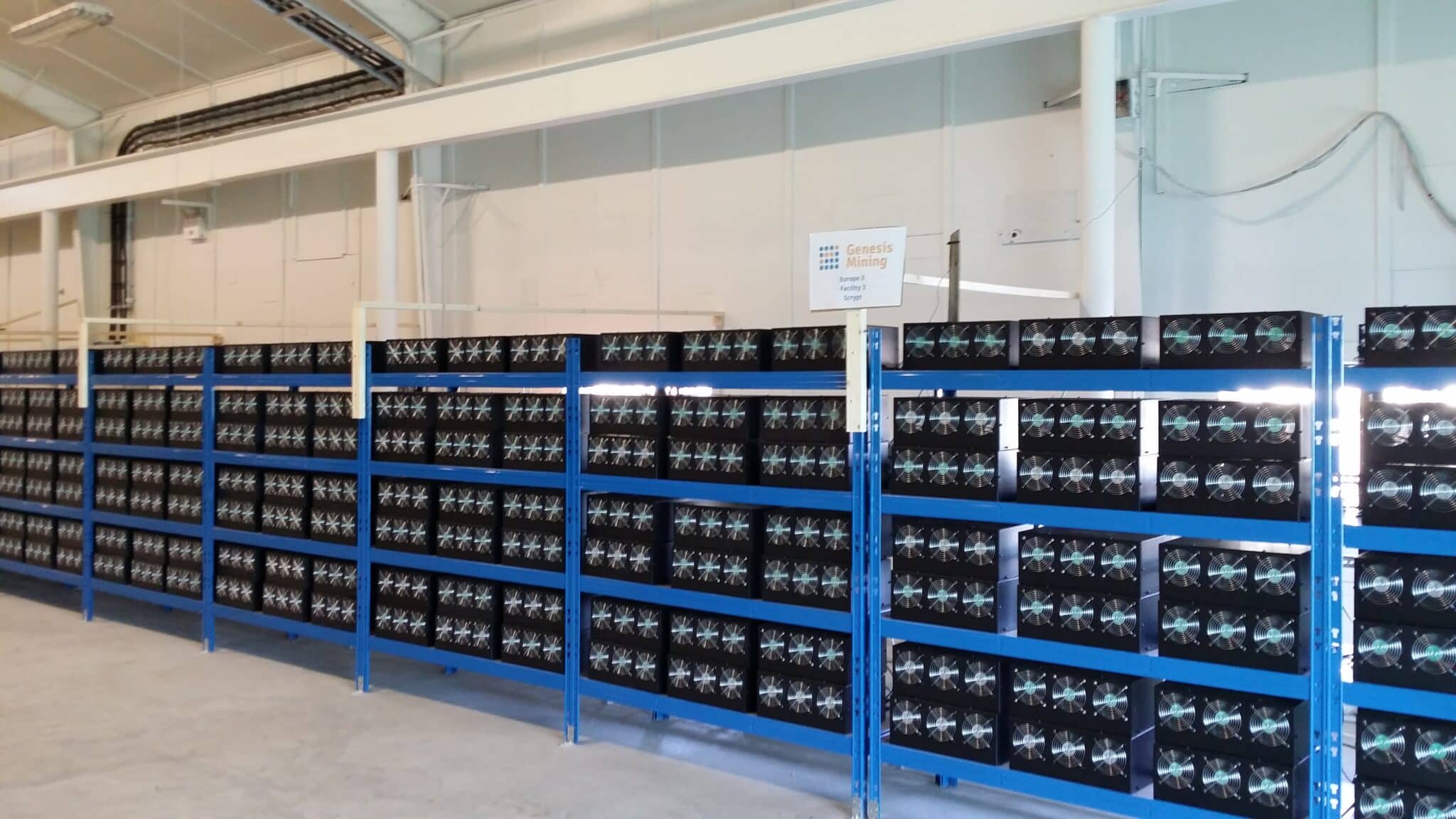
Growing strain on hyperscalers has revitalized efforts to build alternative infrastructure layers. These emerging networks pull capacity from gaming GPUs, local data centers, consumer hardware and idle bandwidth.
Gaimin, for example, aggregates GPU power from gaming PCs and supplements it with regional data centers, forming a geographically diverse mesh network. Uplink applies similar logic to connectivity, enabling individuals and small operators to sell surplus bandwidth to applications that need it, reducing dependence on telecom giants.
Meanwhile, researchers increasingly argue that the future is hybrid — blending hyperscalers, edge networks and bare-metal servers. In this model, traffic dynamically shifts when a region fails, producing a more fault-tolerant framework without discarding the flexibility of traditional clouds.
As Yair Cleper of Lava Network noted, cloud elasticity remains indispensable, but diversification strengthens resilience without forcing a complete rebuild.
A More Resilient Road Ahead
As demand for compute intensifies — driven by AI, high-frequency trading, and dense Web3 applications — centralized cloud capacity simply cannot scale fast enough. The goal, then, is not to eliminate AWS or Google Cloud, but to complement them with distributed, regional and user-driven infrastructure.
In other words, crypto’s infrastructure has not yet caught up with its ideals. However, the industry is actively reshaping the path forward, transitioning from pure dependence to a layered, diversified architecture. And as the pressure on centralized systems continues to mount, distributed networks may finally begin closing the gap between the vision of decentralization and the reality of how blockchain truly runs.
Trade on MT4 with Leverage up to 1:500! Trade on MT4 with Leverage up to 1:500!
X
We use cookies to ensure that we give you the best experience on our website. If you continue to use this site we will assume that you are happy with it.








 The Rise of Hybrid and Distributed Models
 The Rise of Hybrid and Distributed Models