Key Takeaways:
- Sui launched a revenue-funded buyback using gas fees and stablecoin yield.
- The model creates ongoing demand by reinvesting revenue into SUI.
- Its long-term impact depends on USDsui adoption and network growth.
Most Layer-1 networks generate fees and let them sit. Sui just formalized a mechanism to turn that revenue into direct token demand — a structural change that ties the network’s growth to its own price in a way few competitors have replicated.
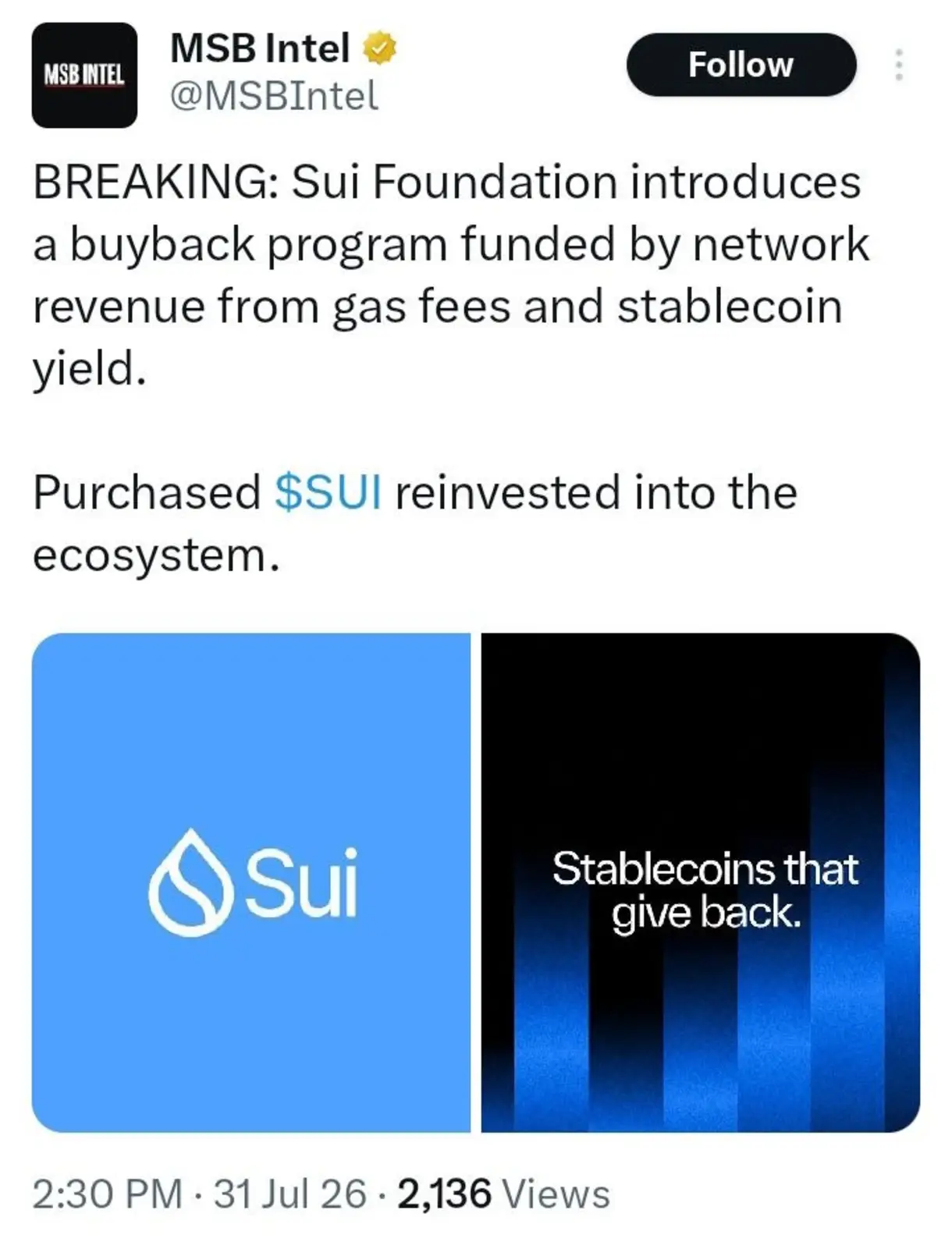
MSB Intel reported on July 31, 2026 that the Sui Foundation has introduced a buyback program funded by network revenue from gas fees and stablecoin yield, with the purchased SUI reinvested back into the ecosystem.
The Mechanism Behind the Buybacks
This program builds directly on infrastructure Sui put in place earlier in the year. The network’s native stablecoin, USDsui, launched with a specific design goal: rather than letting reserve yield flow entirely to the issuer, the way Circle and Tether have historically kept the interest earned on their Treasury-backed reserves, USDsui routes that yield back through two channels — direct SUI buybacks on the open market and capital deployed into DeFi liquidity. Gas fee revenue now appears to be feeding the same buyback channel, giving the program two separate income sources rather than one.
What The Chart Shows Right Now
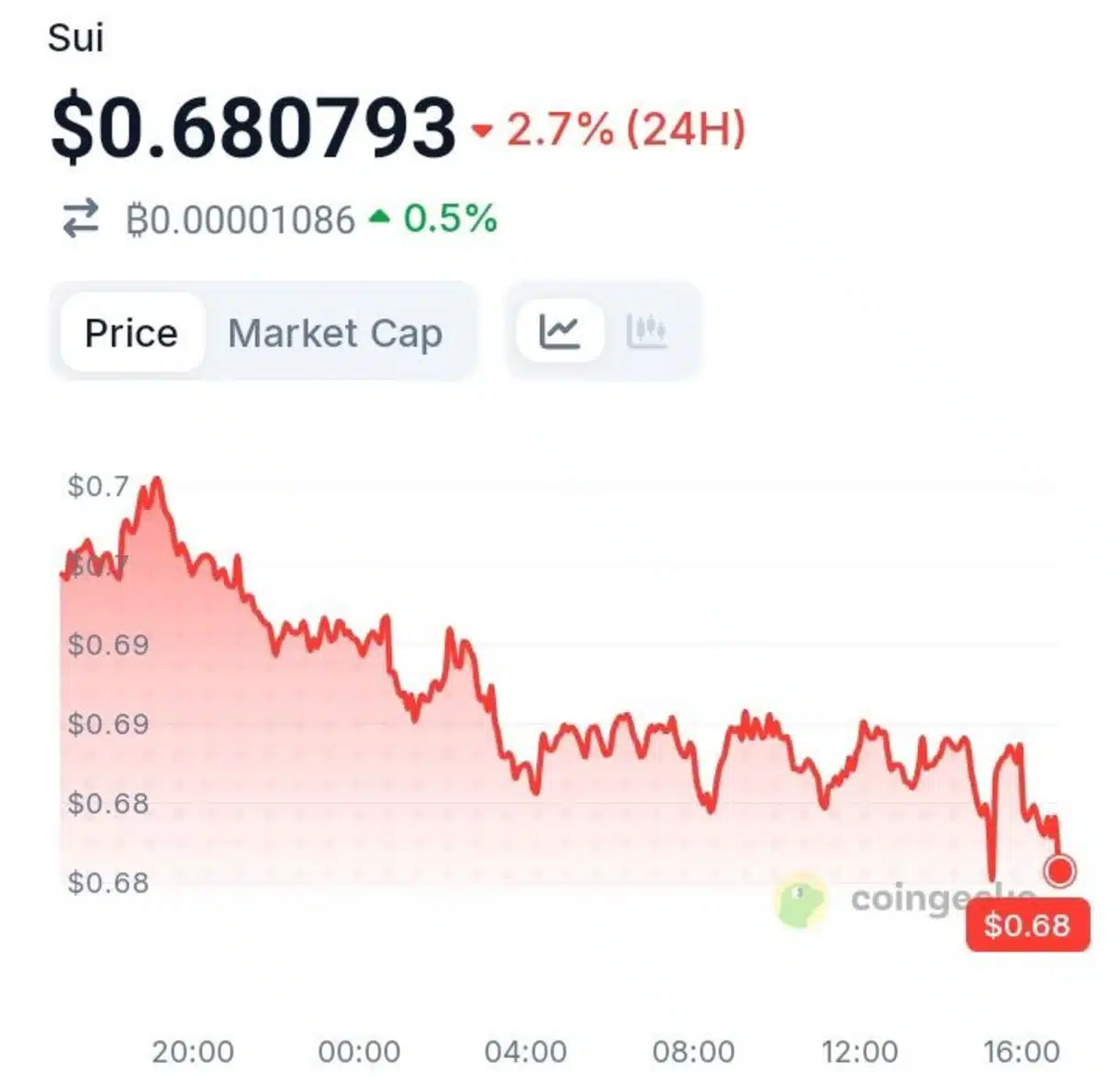
Looking at the 24-hour chart, SUI opened near $0.70 and spent the session in a steady decline, sliding through the morning hours to a low near $0.679 before stabilizing at $0.680793 by late afternoon. The buyback announcement landed in the middle of that downtrend, and price action so far shows no clear reaction — a reminder that a structural revenue mechanism tends to accumulate influence over months rather than move a chart in the hours after it’s announced.
Why the Design Matters More Than the Headline
The significance here isn’t the existence of a buyback — plenty of networks and protocols run them. It’s what’s funding it. Tether alone reportedly generated more than $13 billion in profit in a recent year holding stablecoin reserves, none of which flowed back to the blockchains hosting that activity. Sui’s model inverts that relationship, treating stablecoin reserve yield as network revenue rather than issuer revenue.
The scale of that revenue is tied directly to USDsui’s circulating supply: a stablecoin with a small reserve base generates a modest buyback budget, while a reserve base in the billions produces buyback pressure large enough to matter for SUI’s broader supply dynamics.
The Open Question Is Adoption, Not Mechanics
The buyback structure only works at scale if USDsui — and now, apparently, gas fee revenue — actually grows large enough to fund meaningful purchases. Sui has processed more than $1 trillion in cumulative stablecoin transfer volume, giving the network a real base of activity to convert into reserve yield, but USDC and USDT still dominate stablecoin usage across most chains, including Sui’s own. Whether users and DeFi protocols shift meaningfully toward Sui’s native rails, or continue defaulting to the incumbents out of habit, will determine whether this buyback program becomes a steady structural tailwind for SUI or a mechanism that never accumulates enough scale to matter.
- Broker
- Min Deposit
- Score
- Visit Broker

- Award-winning Cryptocurrency trading platform
- $100 minimum deposit,
- FCA & Cysec regulated

- 20% welcome bonus of upto $10,000
- Minimum deposit $100
- Verify your account before the bonus is credited

- Fund Moneta Markets account with a minimum of $250
- Opt in using the form to claim your 50% deposit bonus
Learn to Trade
Never Miss A Trade Again

Signal Notification
Real-time signal notifications whenever a signal is opened, closes or Updated

Get Alerts
Immediate alerts to your email and mobile phone.

Entry Price Levels
Entry price level for every signal Just choose one of our Top Brokers in the list above to get all this free.